
$20.00
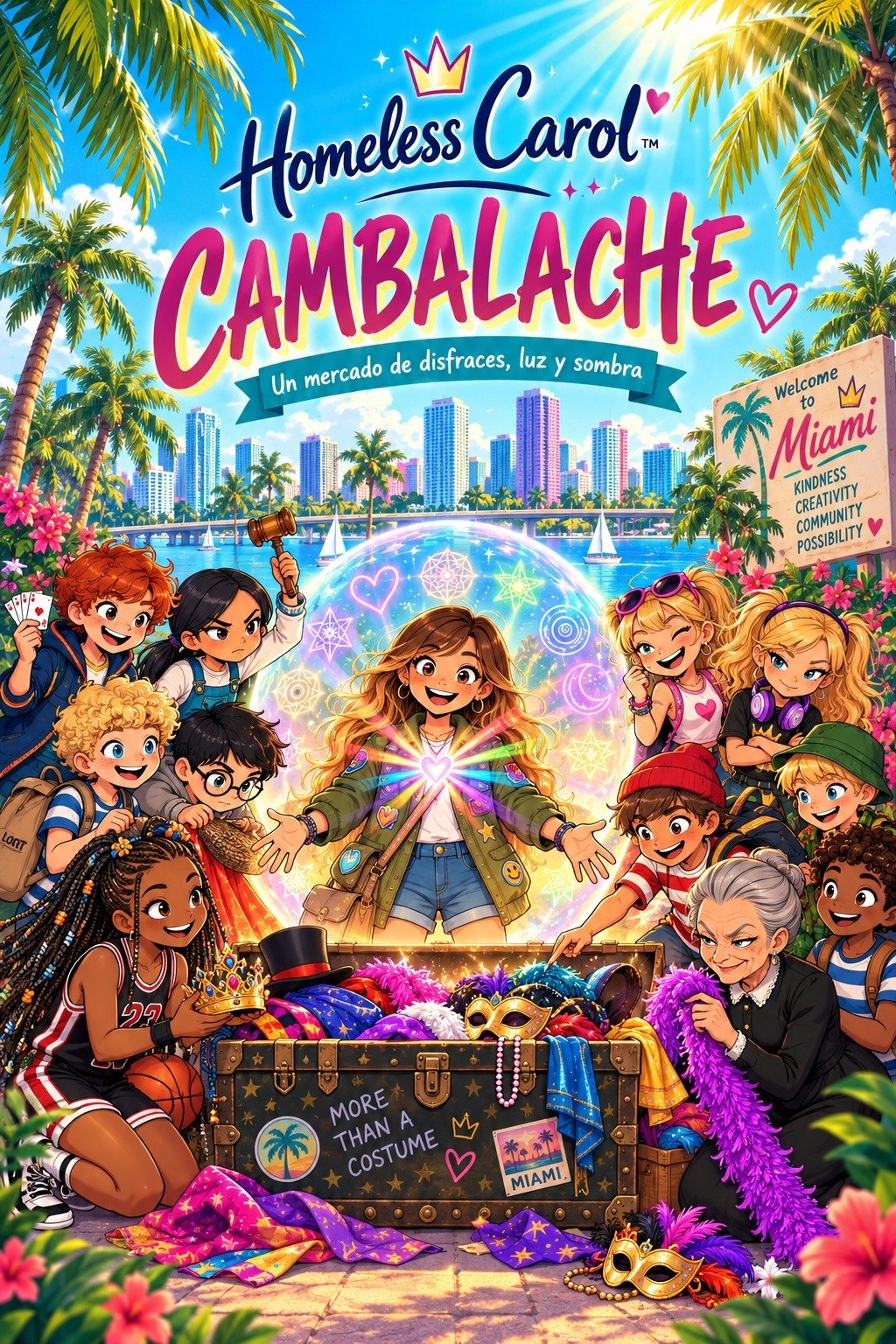
An old steamer trunk arrives at the playground overflowing with costumes, objects, and unexpected possibilities.
In Cambalache, Carol and her friends discover that value is not always fixed. It can change through imagination, need, timing, story, and the way people see what is in front of them.
Availability:
In StockWhat if something ordinary could become valuable simply because someone saw it differently?
In Homeless Carol — Book 2: Cambalache, Carol arrives at the playground dragging an antique steamer trunk packed with costume pieces, unusual objects, and forgotten treasures.
As the children gather around, each one chooses something different.
A striped shirt.
A paper crown.
A tin cup.
A wooden gavel.
A pair of glasses.
A cloak.
A sailor’s cap.
A blindfold.
At first, the objects seem random. Some look useful. Some look silly. Some appear valuable, while others are ignored.
But as the children begin to exchange, compare, trade, and imagine, the meaning of each object starts to change.
A hat becomes a symbol of confidence.
A mask raises questions about identity.
A crown creates status.
A simple cup becomes important because someone needs it.
A forgotten object becomes desirable once a new story is attached to it.
Through this playful marketplace of ideas and belongings, Carol helps the group understand that value is often shaped by perspective, desire, scarcity, usefulness, emotion, and story.
Cambalache transforms an ordinary exchange game into a meaningful lesson about trade, identity, fairness, perception, and the many ways people decide what something is worth.
Value
Understanding that worth can depend on need, meaning, timing, and perspective.
Exchange
Learning that a fair trade should make sense to everyone involved.
Identity
Exploring how clothes, objects, and roles can influence the way we see ourselves.
Creativity
Discovering new uses and meanings for things that others may ignore.
Perspective
Recognizing that two people can look at the same object and see something completely different.
As the trunk opens, the playground becomes a small world of negotiation, imagination, and discovery.
Each child brings a different personality to the exchange. Some choose quickly. Some hesitate. Some follow the crowd. Others recognize value before anyone else does.
The experience helps readers see that every transaction includes more than an object. It also includes emotion, trust, information, expectations, and choice.
Ages 7–12, with meaningful lessons for families, educators, and readers of all ages.
Value is not always hiding inside the object.
Sometimes, it lives in the story.
Sometimes, in the need.
Sometimes, in the person who knows what to do with it.
Look again. Imagine more. Discover the value others may have missed.

Reviews
There are no reviews yet.